
Dynamic Inventory Ads for Car Dealers on Social Media

Updated: Apr 15
Running dynamic inventory ads on social media is a go-to tactic for automotive dealership marketing. Sometimes referred to as catalog ads or “AIA”, short for automotive inventory ads, the setup and presentation have evolved over the years, but the core concept of proactively getting inventory in front of eyeballs is the same.
This campaign type is most commonly run on Meta Ads, showing vehicles on Facebook & Instagram, and is also available on other social media ad platforms such as TikTok. Dynamic inventory campaigns on Google Ads differ in purpose and function compared to their social media counterpart, and we get into those details in our guide to dynamic inventory search ads. In this post, we’ll focus on how it works on social media.
We’ll give you a basic understanding of the setup, some best practices, and also some things to avoid.
What Are Dynamic Inventory Ads and How Do They Work on Social Media?
Usually seen in carousel format on social media, vehicle dynamic inventory ads are populated automatically by a catalog of product data behind the scenes, updated at regular intervals, meaning potential customers are getting a live look at what you have. They can scroll through the carousel to browse, and you can customize what happens when they click on a vehicle to get more info; the ad click can send them to the vehicle detail page (VDP) on your website, open an instant contact form, and more.
That’s just the tip of the customization iceberg. From the ad copy to the attributes displayed next to each vehicle, we have the ability to present your inventory essentially however you want. We can also design a frame to overlay on each vehicle’s photo, be it just to look good, or to put more emphasis on something like a seasonal promotion.
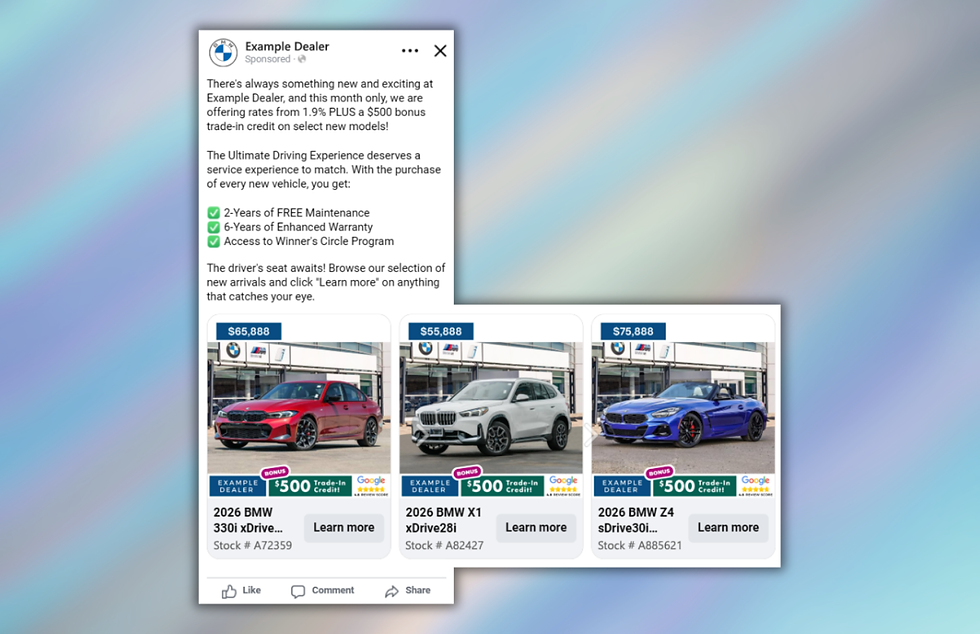
Here is an example of an ad as it would appear on a Facebook newsfeed. Let’s say our dealer client asked us for:
Professional yet friendly ad copy showing rates from 1.9% and a $500 bonus trade-in credit, plus some other why-buy points
Year, make, model, and stock number of each vehicle
The price element using a blue color matching their logo
A colorful frame over the photos featuring their logo, the trade-in credit, and their Google review score

As you can see with each vehicle, the year, make, model, and stock numbers are dynamic elements, meaning they get pulled from the inventory catalog for each respective unit. If you want to include other fields in that text portion such as the color name or body style, those are available too, you just have to be mindful of character limits as there isn’t much room, and things can get cut off if they’re too long, so it’s best to keep it clear and to-the-point.
You can also decide whether you want to show prices, be it just the current number or the discounted was/is style. We generally recommend showing prices because transparency tends to work better than trying to tease people into contacting to find out the prices. Making customers work to get what they want is an outdated tactic, and dynamic inventory ads are about being convenient for them.
In fact, sellers who regularly re-price their inventory report getting more inquiries on their vehicles from people who saw a given unit at a certain price one day, either on the lot or online, but then saw it again in the following days advertised at a different price. That’s not deceptive or something to cause outrage, mind you, as any seller can change their price at any time, and dynamic inventory ads help keep customers updated.
If the customer sees the vehicle is now on sale, that’s a win for them. Conversely, if they see the price has gone up from when they last saw it, they tend to inquire and say something like “I saw it the other day listed at $29,000, today you’ve got it at $31,000, that can’t be right” to which the salesperson can say “Correct, the market has changed and that same car is worth more now, but if you’re serious, let’s talk.”
This campaign type works well because it provides steady exposure for your inventory that grabs attention with ever-changing selection and builds urgency. It illustrates that what you see today may not be available tomorrow, both in terms of what’s currently in stock and the respective prices.
How to Maximize the Effectiveness of Dynamic Inventory Ads
There isn’t a single correct way to approach it, but here are three of our own best practices we often keep in mind when trying to get the most bang for your buck:
✅ Run separate ads dedicated to key inventory segments
We could simply lump all inventory into one pool from which the ad delivery system can select and show - and sometimes that performs the best - but creating distinct sets of similar vehicles allows you to push those specifically, both in the units shown in the carousel and in the ad copy. For example, grouping vehicles by body style, price range, or aged inventory helps address those segments of your inventory that need the most attention.
✅ Use a one-two punch of prospecting and remarketing
The typical way of setting up these campaigns is having some ads targeting a broader audience in your area, then some which utilize VIN-specific remarketing to show people who have browsed vehicles on your site the same vehicles they looked at as well as other similar units in stock. Also known as “dynamic remarketing”, this is made possible by setting up ViewContent tagging on your website, which matches the vehicle ID between the tracking pixel and the catalog. The ad delivery system deduces that a given user checked out a certain unit, then selects that vehicle from the catalog to show the next time they see the ad. This tactic is especially powerful when paired with active re-pricing of your inventory as mentioned above. But remember: if your pricing is out of touch with reality, people won’t be interested no matter how many times they see it.
✅ Evaluate the success of this campaign type in context
Think like a customer; usually they don’t see a vehicle and immediately buy it, or even contact right away as they browse social media. These ads are great for driving engagement among people who are considering buying a vehicle, but usually when they decide to contact, they look up the dealership with a general sense of what they want already. That means dynamic inventory campaigns don’t always show a ton of conversions themselves in reports, but they tend to lift conversion volume from other channels. We’ve had clients ask to pause their dynamic inventory ads because they don’t see many conversions directly attributed to them, who then notice a drop in overall conversions in coming weeks/months. Then it's a lesson learned, and back on they go.
Things to Avoid When Running Dynamic Inventory Ads
Less subjective in nature than what looks good, here are three recommendations regarding what to avoid.
🚫 Poor quality or missing inventory photos
While we can dress up a vehicle with a frame, if the vehicle photo itself is faulty, it can only do so much, so make sure your photos look good. It should go without saying, but also ensure you have photos for each vehicle you are selling as soon as possible, and avoid using “coming soon” placeholders, like the below example. Those don’t build suspense for customers, they kill curiosity and scroll onto the next thing.

🚫 Cluttered overlays that distract or cover the vehicle
Some dealers opt to put an overlay on the raw vehicle photos, so that they show on the website and everywhere else their inventory is seen, and we understand the goal of getting a message out there, but it can become too cluttered in a hurry when there is an additional overlay used in the ads, covering the existing text in frame. Take the below example of a vehicle photo as seen on a dealer’s website. It looks fine, but more importantly, it doesn’t need a second overlay on the ad. Fight the urge to make images a wall of text!

🚫 Oversaturating a remarketing audience
When VIN-specific dynamic remarketing was introduced, dealers got excited, and rightfully so, because it’s a precise and effective tactic. The trouble is if that’s all they do, the audience size remains small and they over-spend on remarketing without replenishing it with new prospects. When that happens, they end up showing the same ads to the same people over and over. That’s why we typically advise our clients to allow us to move budget around based on what needs help at a given time. Dynamic remarketing is great, but don’t neglect your upper funnel efforts, or you’ll drive shoppers crazy with repetition.
Pie Comic illustrates the sentiment well:

(Source)
So What?
Dynamic inventory ads on social media have been around for long enough that some dealers forget about them or brush them aside in favor of other trends, but they remain a core pillar for a successful mix of campaigns. We believe in giving these ads close attention, from getting the setup technically sound, to ensuring the customer-facing ads look polished and intentional.
Is your inventory getting the attention it deserves?
If your dealership isn’t running dynamic inventory ads on social media, chances are, you’re not getting the same exposure and engagement as your competitors.
If you are running them but would like a second opinion, we should talk! We would be happy to answer any questions, or have a brainstorming session on building a winning strategy for your dealership.
